















When sports fans across the US tune in to watch their favorite team, it’s become nearly impossible to not discover a semblance of betting integrations – whether that’s on-field branding or marketing strategies implemented through digital channels. For years, the NFL, MLB, NBA and NHL have all partnered with operators in different capacities, extending the crossover between professional sports and betting since PASPA’s repeal in 2018.
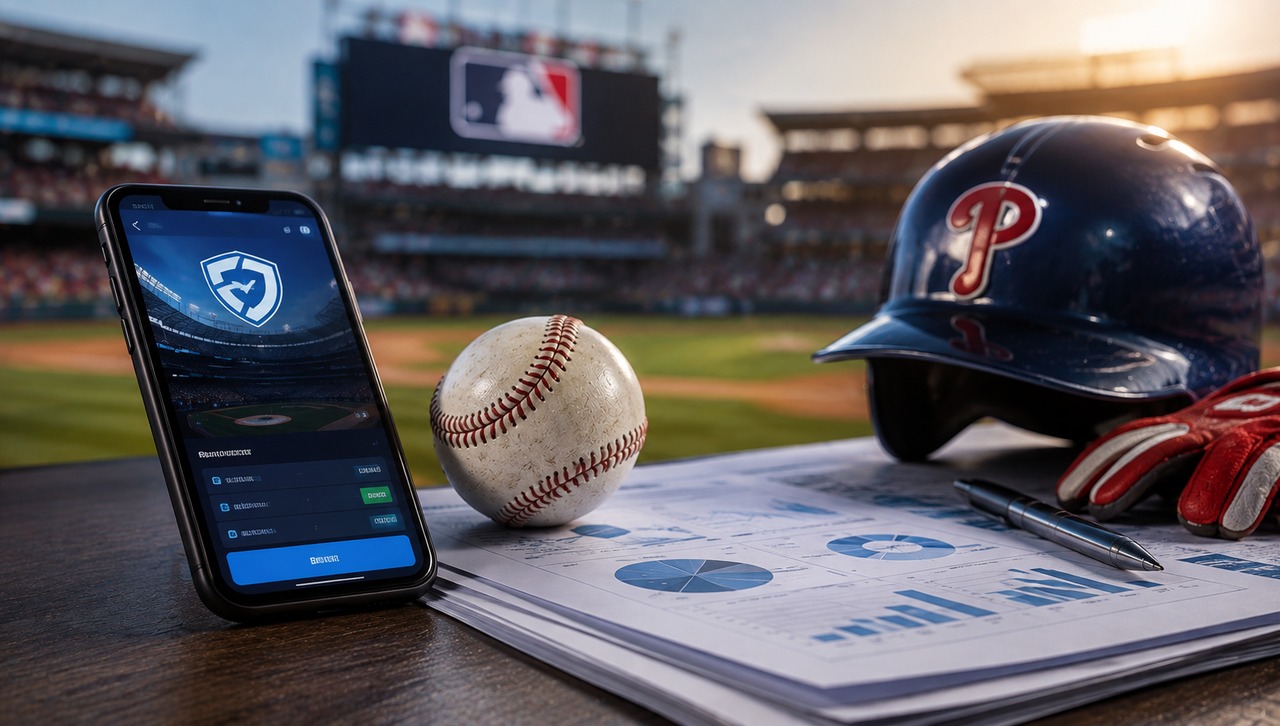
In some instances, however, the collaborations may have been taken a step too far following headlines of betting manipulation, player suspensions and – most recently – lawsuits against operators as a result of direct promotions. Over the last few weeks, no story has captured more attention than the saga unfolding with Philadelphia Phillies first baseman Bryce Harper, FanDuel and sports bettor Terry Thompson.
On the website Cameo, Harper filmed a 21-second video for Thompson in November 2024, where the MLB All-Star addresses Thompson – and his son – by name, while the clip is also marked with a FanDuel logo. The video’s script was shared on social media by Harper, which includes an attribution to “your host Bryttanni (Morgan) at FanDuel.”
Thompson sued FanDuel, Morgan, DraftKings, the NFL and Genius Sports in March for allegedly causing him to become a gambling addict, leading to approximately $2m in losses. The lawsuit marks yet another example of the dangers in mixing professional sports with betting, which may only become an even more tepid recipe as MLB unveils new collaborations with prediction markets.
Did FanDuel have ‘no right’ to use Harper's video for promotion?
Following the video becoming public knowledge – as well as its connection to Thompson’s lawsuit – Harper released a statement addressing his involvement, claiming FanDuel had “no right” to use the footage for “commercial purposes.” Despite Harper’s defense, the script he shared on social media seems to make it quite clear the video was being requested by a FanDuel employee given Morgan’s inclusion in the text.
It does beg the question if collaborations between professional leagues and sports betting operators should stop once athlete participation comes into play. After all, it’s not as if Harper could ever partake in a “Harper’s Home Run Parlay” type promotion where he shares his own wagers, so why should be making content which incentives wagering in the first place?
In FanDuel’s defense, it appears Thompson’s issues extend far past Harper’s video being shared by Morgan, especially after naming the NFL, Genius Sports and DraftKings in the lawsuit as well. While Thompson may argue the video did nothing but enhance his gambling interest, generating $2m in losses and suffering from addiction stems from activity far greater than what Harper would have motivated.
MLB has yet to show signs of slowing its desire to collaborate with the most notable entities involved with sports betting
Still, this was clearly a user in need of problem gambling assistance and was instead provided promotional offers and gifts as encouragement to wager additional funds – including hotel accommodations and even tickets to the Super Bowl. Claiming FanDuel had “no right” to send the video to Thompson is a tad far-fetched on Harper’s part, but ultimately it’s not as if he has the type of access to Thompson’s betting records as the operator itself would.
Thompson’s lawsuit could start a rather ironic chain reaction of sports bettors who have suffered massive losses claiming that the additional promotions and incentives they receive as loyal customers actually fueled their addiction. As sports betting operators continue to expand rewards offerings each year, how will such organizations alter their promotional methods to ensure protection from claims such as Thompson’s?
With the situation having escalated this summer, US lawmakers jumped into the fray to urge MLB and the MLB Player’s Association to restrict promotional collaborations between players and sports betting operators. Whether MLB makes such adjustments is still to be determined, especially as new players enter the US betting scene and create additional partnership opportunities.
Lawmakers advise caution, MLB eyes predictions future
Senator Richard Blumenthal – along with Representatives Paul Tonko and Valerie Foushee – called on MLB and the league’s Players Association to “demand an end to the MLB and MLBPA policies that enabled this type of predatory promotion.”
“Despite clear harms that VIP programs pose to bettors, MLB and MLBPA continue to disregard fan safety by permitting partnerships with sportsbooks operating these programs,” Blumenthal, Tonko and Foushee stated.
“We demand an immediate end to this policy. MLB and the MLBPA must not allow players, regardless of their level of awareness, to legitimize sportsbook VIP programs designed to exploit the most vulnerable fans.”
Over the past 12 months, MLB has worked with operators such as FanDuel and DraftKings to limit the types of propositional wagers offered to bettors, as well as how much can be wagered on each slip. The restrictions were put into place following a betting manipulation scandal involving Cleveland Guardians pitchers Emmanuel Clase and Luis Ortiz, who allegedly rigged pitches to benefit sports bettors.
While US lawmakers hope to see further change be instilled as a result of the Harper-FanDuel incident, MLB has yet to show signs of slowing its desire to collaborate with the most notable entities involved with sports betting. Surrounding the request to prohibit such promotions, two of the professional baseball league’s most storied franchises signed new agreements with prediction market operators to provide a first-time glimpse into the vertical’s future within MLB
How the league balances its new relationships with newfound stress from US politicians will be a defining moment for MLB, especially as prediction markets continue to fight legal uncertainty in multiple states
The New York Mets appointed Novig as the franchise’s exclusive official prediction market partner, representing the first-ever collaboration formed between an MLB club and prediction market operator. Shortly after, the neighboring New York Yankees signed a new agreement with Polymarket, building on the operator’s existing partnership with MLB.
MLB previously confirmed Polymarket as an official partner back in March, providing the operator access to official data and league marks to support market settlement. MLB Commissioner Rob Manfred and Commodity Futures Trading Commission (CFTC) Chairman Michael Selig also formed a separate confidential information-sharing agreement, establishing a framework for ongoing regulatory coordination.
How the league balances its new relationships with newfound stress from US politicians will be a defining moment for MLB, especially as prediction markets continue to fight legal uncertainty in multiple states. It appears MLB has no fear of being associated with such activity, though, proven by its efforts to integrate Novig and Polymarket even after the recent Harper controversy was already brought to light.
Will prediction markets overtake traditional operators in sports marketing?
While the introduction of prediction market collaborations in MLB may have been expected by some, the decision to offer confidential information to the likes of Novig and Polymarket less than a year after the Ortiz-Clase incident is certainly peculiar. Especially when factoring in pressure from Blumenthal, Tonko and Foushee, perhaps waiting for the 2026 season to play out before unveiling the partnerships would’ve been a better strategy for the league.
It could be argued that impending battles between the MLB and MLBPA may have been a factor in announcing the partnerships this summer, as the league expects to enter a lockout from play by 2027.
Prediction markets and sports betting are by no means a reason for the anticipated pause, but MLB could have wanted to preview how the collaborations will function before entering a lockout for upwards of the entire year.
The new relationships built between prediction markets and MLB extends the vertical’s recent entrance into professional sports, as the NHL has also signed deals with the CFTC, Kalshi and Polymarket over the past 12 months. While the NBA and NFL have yet to join the predictions party, it could only be a matter of time until basketball and football fans are exposed to the same promotions being brought to MLB and the NHL.
Sports betting operators have found a home with professional sports leagues and respective franchises for many years, but is advertising and marketing the next area where prediction markets will look to take over? Potentially - but issues such as the recent Harper-FanDuel controversy show where leagues and operators can drop the ball time and time again.
Will prediction markets be a home run for MLB, or is the league set to strike out with its latest gambling expansion?
FanDuel confirmed its market entry into Alberta after the province’s newly regulated online gambling market launched on 13 July, joining operators such as DraftKings, Caesars and BetMGM