






























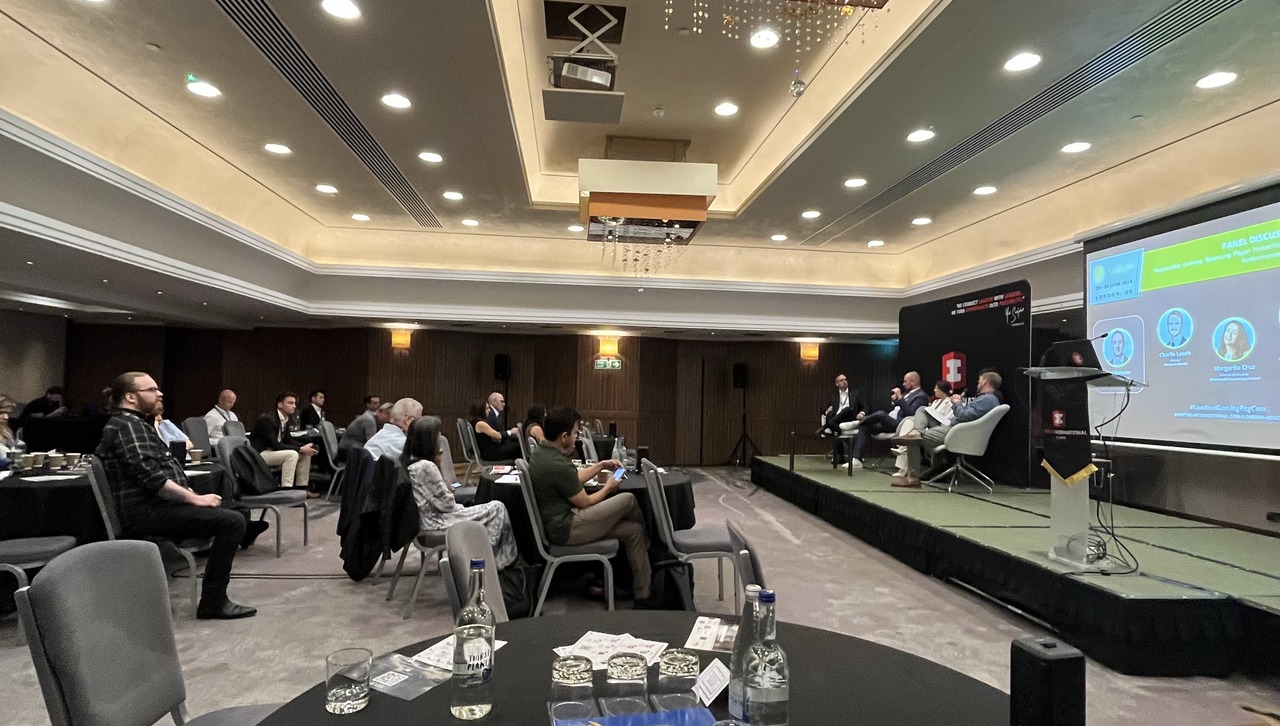
Vixio’s Chief Research & Data Officer Roseanne Sapgnuolo opened this discussion at London REGCOM 2026 by exploring the topic of operator and regulator coexistence, observing the global trends of high taxes, concerns around RG and affordability and the third is increasing competition from illegal operators or alternative verticals such as prediction markets.
Usher gave her view on whether a lack of compliance for operators is an operational or legal issue. She stated that it usually is caused by an operational issue that has been overlooked, which is why implementing effective, integrated and forward-thinking compliance teams across the board is so important.
She continued that compliance meetings must be scheduled as a non-negotiable, while Sapgnuolo further built on the point that collaboration both between company departments, as well as external stakeholders, is crucial for effective compliance procedures. Orr outlined that bottlenecks are often workflow issues, and embedding good governance in the process is key to taking away friction in the compliance process: "If you remove that friction, everyone's a winner."
Orr continued by giving a real-life example of Betfair, which had Ronaldo as a partner asset for a World Cup campaign. They went to an agency, who gave them an idea which they took on, but it was rejected by compliance six weeks ahead of the World Cup because of a recent legal change in state law. He underlined that, had compliance been involved throughout the whole process, a lot of money would have been saved on what was ultimately a wasted campaign.
Affiliate manager Kalinowski highlighted that compliance is a key facet of ensuring effective marketing, while Thakor-Rankin explained that compliance is needed because it ensures a level playing field.
"It's about finding that balance between finding the right and the wrong amount of compliance. If you understand compliance, you understand the rules and what you can and cannot do.
"The smart organisations understand how compliance sits with their operating model and how it allows them to communicate with their customers more effectively than their immediate peers."
On the subject of AI, Thakor-Rankin posed the question of whether it is being used to enable or replace humans. She outlined that it has its uses for technical standards with regard to regulation, but it becomes tricky when you start implementing it in risk-based scenarios.
"When it comes to safer gambling interactions, you have to be very careful, because it's designed to be 'friendly and helpful'."
Sapgnuolo chimed in with the regulatory perspective, stating that it will not replace human judgement, but they are seeing some compliance teams using it with caution for monitoring and filtering already.
"I don't see it becoming mainstream in compliance terms."
Thakor-Rankin detailed that AI can measure a large number of playing sessions and report what the "real" RTP is based on extensive data, which is one way AI can be used by operators to promote a better experience.
Orr also pointed out that human creativity will always be a key differentiator in effective marketing and product development, and that is something that is not going to change.
Sapgnuolo took a geographic view by using Ontario as an example, explaining that the region is one of the five largest regulated markets globally. She believes that Ontario's outcomes-based compliance and regulatory regime has been relatively untouched since the market opened in 2022.
"Given how new they are, we think they are doing a good job in leading the way. I think some of these newer markets are learning what not to do from past examples, providing a fresher approach with the benefit of hindsight."
Concluding, Dillon posed the question of whether, in five years, compliance will ensure greater profitability for operators over those who do not prioritise it. The panel largely concurred that, unfortunately, it will not. Usher believes that those who move between jurisdictions and do whatever they want are often making more money than their compliant counterparts. However, the panel also outlined that it depends on which jurisdiction you are observing.
This year marks the inaugural London iGaming REGCOM event, bringing industry experts together at the Kensington Hilton for the first time