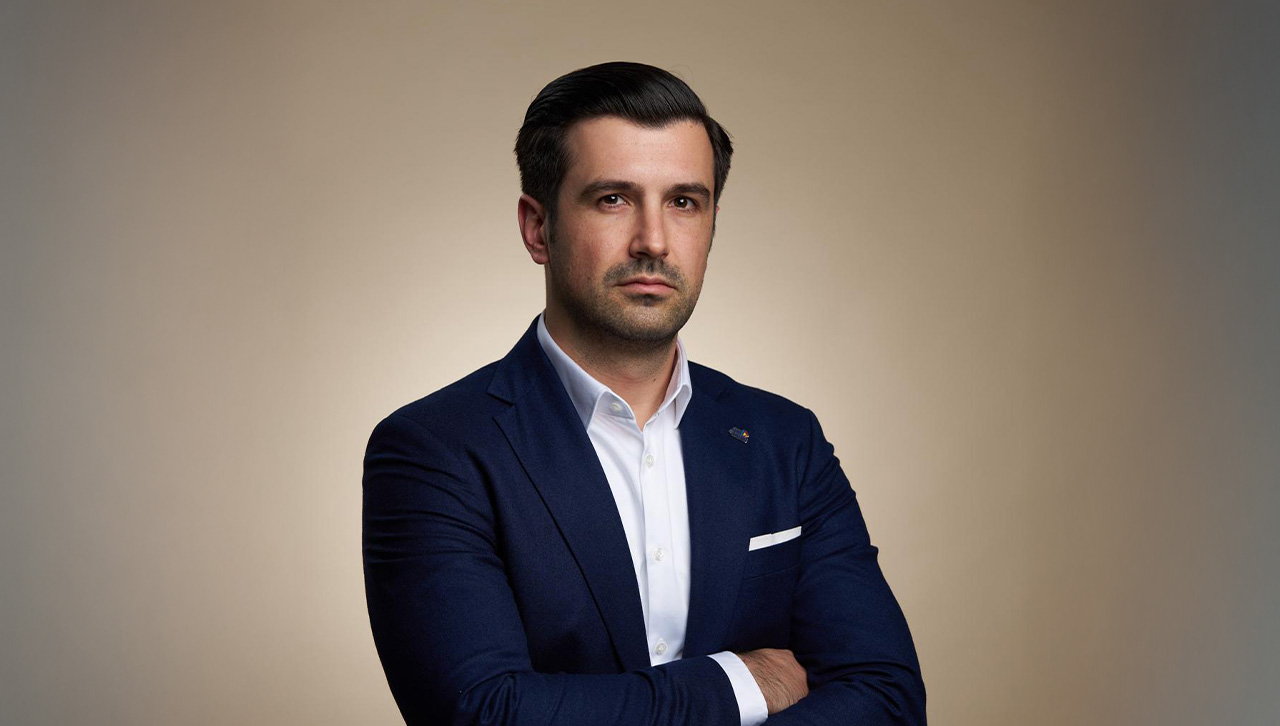
When Peter Jackson took the helm of Paddy Power Betfair in early 2018, the company was a respected European gambling operator, but far from a global behemoth. Fast forward nearly nine years, and the business Jackson leaves behind – following the announcement that International CEO Dan Taylor will succeed him on October 1, 2026 – is fundamentally transformed.
Under Jackson’s stewardship, Flutter Entertainment didn't just grow; it systematically re-engineered the sports betting and iGaming landscape.
Yet Jackson’s departure comes at a compelling crossroads. Set against a backdrop of reduced FY2026 guidance, a Q2 net loss and mounting competition from prediction markets, his legacy is a tapestry of bold strategic bets, aggressive M&A and tactical pivots. He leaves, unfortunately for his legacy, with Flutter’s prediction market conundrum firmly unsolved.
Here’s a breakdown of five key pillars defining the Jackson era; you might call them the Jackson 5...
1. The US gold rush & FanDuel's dominance
Jackson’s signature achievement was recognizing the early potential of the US market well before it became a frantic land grab. Following the US Supreme Court’s 2018 repeal of PASPA, Jackson moved decisively to acquire a controlling stake in FanDuel. While FanDuel is still facing a court case regarding the valuation of that early deal, it has reaped the benefits ever since.
With domestic and international competitors stumbling through hyper-expensive and inefficient customer acquisition, Flutter leveraged its pricing engines and trading expertise to build FanDuel into America’s market-leading online sportsbook and iGaming platform.
As Taylor steps into the Group CEO role, continuing his meteoric rise through the organization, he inherits a corporate titan with gold-medal market positions globally
Today, the US accounts for a huge chunk of Flutter’s broader revenue base – a textbook playbook on overseas expansion.
2. The M&A machine: Scaling global moats
Jackson was never shy about deploying capital to build defensive scale. His crowning deal arguably came in 2020 via the transformative $12bn mega-merger with The Stars Group (TSG), adding PokerStars and Sky Betting & Gaming to the portfolio.
Refusing to just stop there, Jackson continually acquired hyper-local market leaders to secure dominant positions across continents: buying Sisal in Italy, MaxBet in Central and Eastern Europe and a controlling stake in Brazil’s NSX Group (Betnacional).
This aggressive strategy has insulated Flutter against single-market regulatory shocks.
3. The Wall Street pivot
Recognizing that Flutter’s highest valuation multiples and primary growth trajectory lay across the Atlantic, Jackson executed a bold corporate migration. What started as a secondary listing on the New York Stock Exchange (NYSE) culminated in 2026 with the operator officially delisting from the London Stock Exchange (LSE).
By consolidating trading exclusively on the NYSE under ticker FLUT, Jackson aligned the company’s capital structure directly with US institutional investors, effectively redefining Flutter as a global tech-enabled gaming powerhouse rather than a traditional UK bookmaker.
4. Deploying the “Flutter Edge”
Unifying disparate consumer brands under one roof is notoriously difficult, but Jackson championed the “Flutter Edge” – an operational philosophy balancing global scale with local brand autonomy.
Under his tenure, regional brands like Paddy Power, Sportsbet, FanDuel and Sisal maintained their distinct consumer identities and marketing flair; while drawing on shared back-end technology, proprietary risk management and centralized player safety infrastructure.
This unlocked structural margin advantages that smaller single-market operators simply couldn't replicate.
5. Navigating storms and shifting realities
No long-term CEO tenure ends without friction. In his final quarters, Jackson was forced to navigate rising UK and European tax burdens, sports margin volatility and unexpected competitive threats from prediction markets like Kalshi and Polymarket.
Flutter’s aggressive entry into event contract trading via FanDuel Predicts, paired with a newly announced $500m cost-transformation program, shows an organization actively adapting to margin pressures.
Fast forward nearly nine years, and the business Jackson leaves behind - following the announcement that International CEO Dan Taylor will succeed him on October 1, 2026 - is fundamentally transformed
Furthermore, recent senior leadership reshuffles – including Amy Howe's departure from FanDuel and Jackson's own hand-off to Taylor – reflect a business transitioning from high-speed global expansion toward operational efficiency and yield optimization.
One telling comment from his last conference call may sum things up. Flutter spoke of prediction markets generating around $50m by year-end – with the potential to become a “meaningful revenue stream.” But why aren’t they meaningful already – and why aren’t they pushing the billions?
The Verdict
As Taylor steps into the Group CEO role, continuing his meteoric rise through the organization, he inherits a corporate titan with gold-medal market positions globally. He faces challenges, sure, but Jackson’s nearly decade-long tenure will be remembered as the era that turned a regional bookmaker into the world’s largest online gambling group.
Indeed, it sets a high benchmark for the next chapter of Flutter's evolution, albeit at the same time adding pressure – the kind of pressure both Jackson and Howe faced in the closing months of their spells in the CEO seat.
Taylor won’t have it easy – but the scale of the base he’ll operate from is the result of Jackson-era growth. In his final conference call as Flutter CEO, Jackson launched a defense of the operator’s heavy US investment focus. Taylor is now tasked with vindicating that strategy in the long run.
During Peter Jackson’s tenure, Flutter’s annual group revenue grew nearly sevenfold – rising from roughly £1.8bn ($2.4bn) in 2017 to full-year guidance approaching $18bn in 2026