
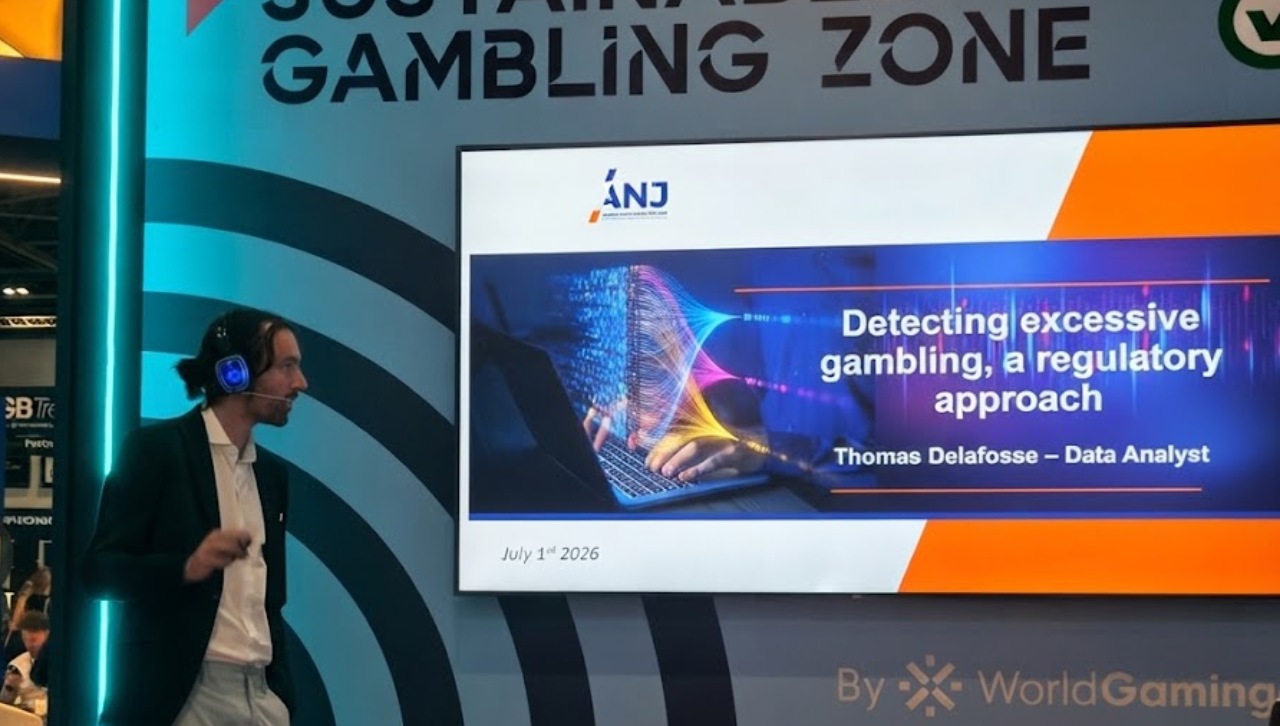
A panel at iGB Live featuring the French regulator’s Data Analyst, Thomas Delafosse, discussed detecting excessive gambling and regulatory approaches. He addressed the complex issue of effectively identifying problem gambling.
In May, the ANJ introduced a new algorithm for licensed operators to improve the detection of excessive gambling behaviour. The tool was designed to strengthen the early identification of at-risk players, as the regulator warned that existing monitoring systems remain largely insufficient.
Delafosse noted that rather than replacing existing responsible gambling measures, the project was developed to support operators in meeting their legal obligations to detect and protect vulnerable players.
Furthermore, the algorithm acts as a reference point rather than providing a precise diagnosis. As the ANJ representative explained, it is impossible to produce perfect figures, but the aim is to generate reliable estimates based on player behaviour.
The algorithm is based on a heuristic model built from professional expertise and scientific literature. As a public regulator, transparency was considered essential, meaning that every element of the model could be explained and understood by operators and regulators, rather than relying on a complex "black box" AI system.
The model combines 23 behavioural indicators, grouped into five categories: financial flows, responsible gambling tools, gambling activity, frequency of play and player history.
Financial indicators carry the greatest weighting within the model, reflecting the regulator’s view that financial behaviour remains one of the strongest indicators of gambling-related harm. These indicators are combined to produce a risk score for individual players.
Delafosse highlighted why financial losses cannot be assessed in isolation. While losses are often used as an indicator of gambling harm, they can be misleading without context.
If a player has a higher income, they are more likely to deposit more. This is something ANJ takes into account. The algorithm therefore considers losses alongside other indicators of harm to produce a more balanced assessment of risk.
The scientific community has validated the ANJ algorithm’s performance with a sensitivity of 90% and a specificity of 70%.
Around 90,000 excessive gamblers were identified by French operators in 2025, while the ANJ estimates the real figure exceeds 600,000