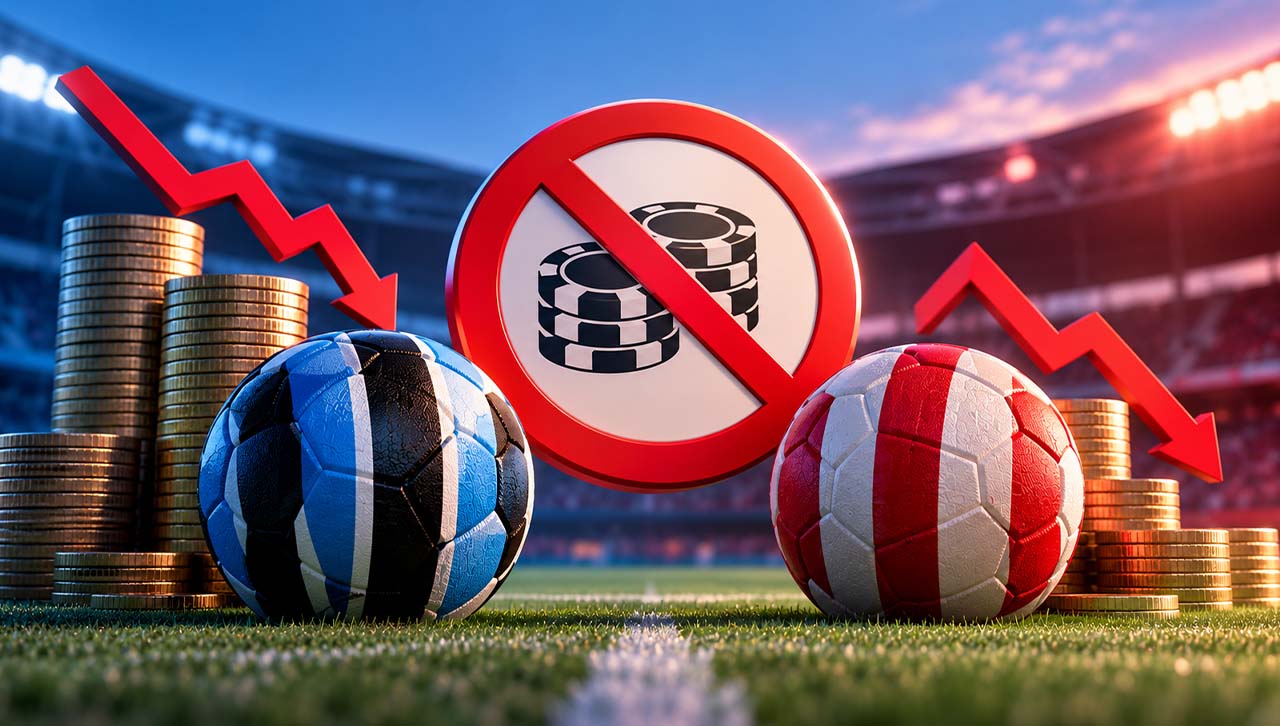
Brazil’s ban on betting advertising is creating another financial challenge for football clubs already dealing with substantial debts and uncertain revenue streams.
With betting companies having become major shirt sponsors across the country’s top division, restrictions on the sector are forcing teams to reconsider how they fund their commercial operations.
The impact varies significantly between clubs.
According to the figures presented in the accompanying analysis, São Paulo generated 73% of its marketing revenue from sponsorship and licensing linked to bets in 2025, followed by Atlético-MG at 69% and Botafogo at 57%.
Corinthians and Flamengo also relied heavily on the sector, with betting-related agreements accounting for 54% and 50% of their marketing revenue, respectively.
Flamengo’s VP has even warned that losing betting sponsorship money could affect its ability to pay star players.
In Porto Alegre, Grêmio and Internacional have faced a different combination of financial pressures. Both signed agreements with betting company Alfa in 2025 worth approximately BR50m annually, but the contracts were terminated after payment delays.
Inter had finished the agreement before the ban and Grêmio later secured a deal with another betting company, Pitaco, reportedly worth BR40m to BR46m per season. The federal measure subsequently put that agreement in jeopardy.
The clubs’ financial positions leave little room for disruption. Grêmio reported debts of BR935m, while Internacional’s liabilities were estimated at between BR940m and BR1bn. Internacional accumulated a BR160.1m deficit in the first seven months of 2026, while Grêmio recorded a BR157m deficit in the first half.
Palmeiras has decided against bringing in temporary sponsors to replace Sportingbet.
As a share of total revenue, the exposure was lower but still significant: betting represented 15% of Corinthians’ total revenue, 13% of Flamengo’s and 10% each for São Paulo and Santos