






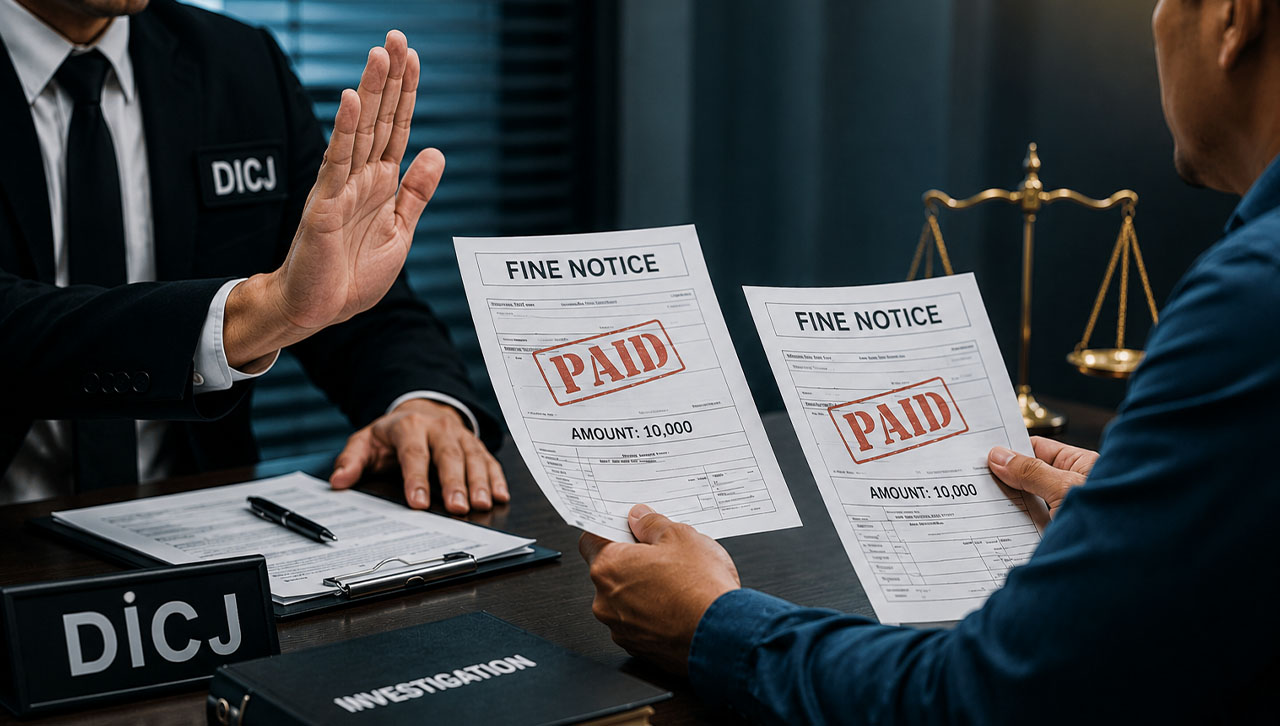
Macau's Commission Against Corruption (CCAC) has criticized the Gaming Inspection and Coordination Bureau (DICJ) after discovering that a resident was mistakenly asked to pay a casino-related fine for a second time. As reported by local media, the incident came to light following a complaint filed by the man's son.
The case stemmed from an incident in 2021, when the resident was fined for disruptive behavior inside a casino and was also prohibited from entering gaming venues. The individual subsequently paid the penalty through the Financial Services Bureau (DSF) and received an official payment receipt.
Under the administrative procedure in place at the time, the resident was expected to submit proof of payment to DICJ. However, the receipt was never delivered to the gaming regulator.
Several years later, in February 2025, DICJ requested that DSF initiate compulsory collection of the same fine, believing it remained unpaid. Following communication between the two departments after the resident raised the issue, officials confirmed that the penalty had in fact been settled.
Although the duplicate collection effort was ultimately resolved without additional payment, the CCAC concluded that the incident exposed shortcomings in administrative coordination.
The anti-corruption body said that once government departments establish mechanisms to exchange information, they should actively ensure records remain up to date rather than relying entirely on citizens to provide documentation that already exists within the public administration.
Following the investigation, DICJ introduced several procedural improvements. Penalty notices now explicitly remind recipients that proof of payment should be submitted to the bureau, while officials have also begun using an electronic interconnection system to verify whether fines have already been paid before commencing collection procedures.
The changes are intended to reduce administrative errors and prevent similar cases of duplicate collection from occurring in the future, while improving coordination between Macau's government departments.
The case has led DICJ to strengthen its administrative processes by using an electronic system to confirm fine payments before initiating collection procedures